Using Antibiotics Wisely: Education on Correct Use to Prevent the Risk of Resistance in the Community
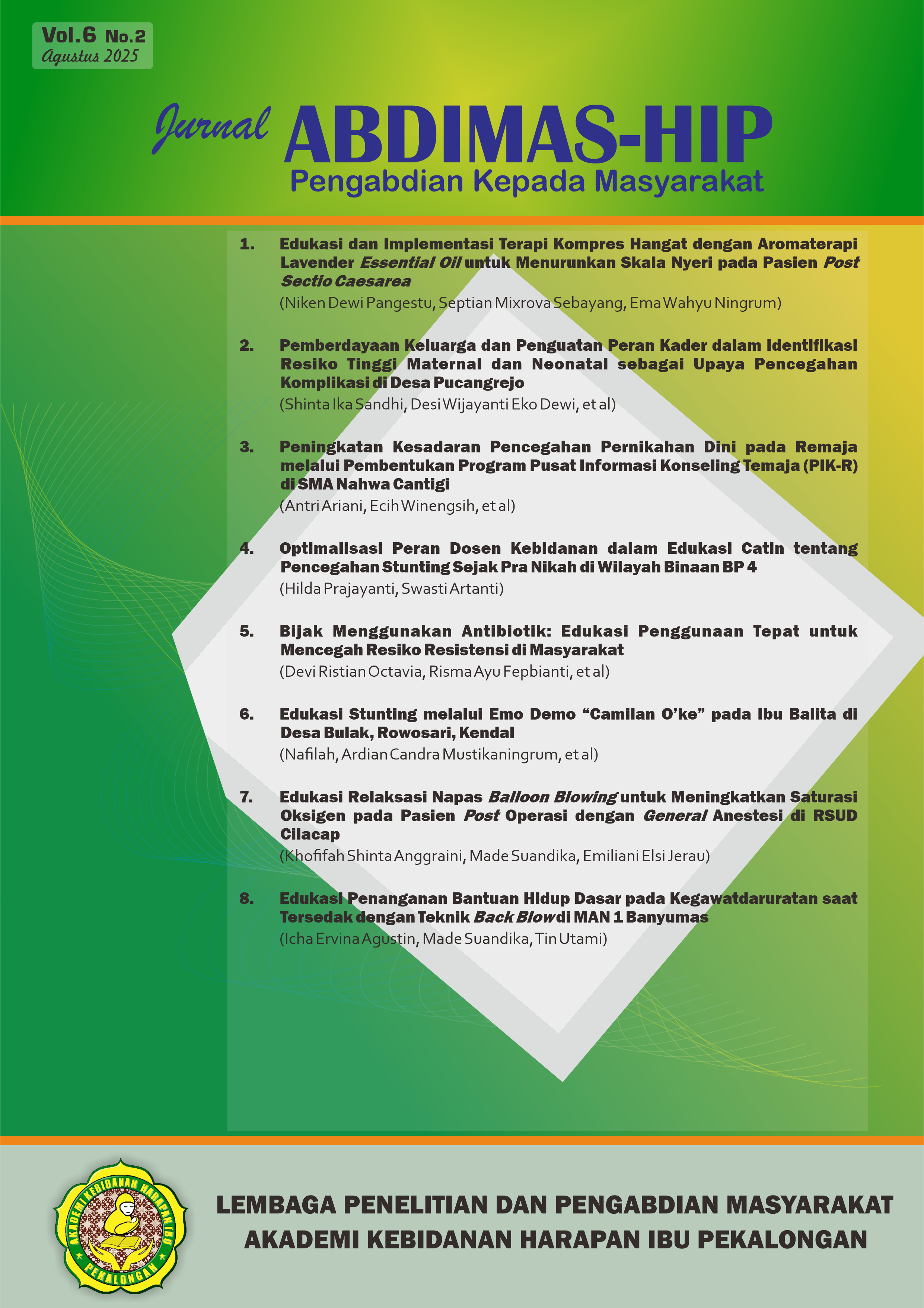
Bijak Menggunakan Antibiotik: Edukasi Penggunaan Tepat untuk Mencegah Resiko Resistensi di Masyarakat
DOI:
https://doi.org/10.37402/abdimaship.vol6.iss2.384Abstract
The lack of public understanding regarding the proper use of antibiotics contributes to the high incidence of antibiotic resistance. This community service activity aims to improve public knowledge about the correct and appropriate use of antibiotics to prevent resistance. The method used includes education and interactive discussions based on the *Active Learning Method for Adults (CBIA)* approach. The education provided covers the definition and function of antibiotics, the concept of resistance, the wise use of antibiotics to prevent the risk of resistance, and mentoring, involving 20 participants from the *PKK (Family Welfare Empowerment) cadre*. Evaluation was conducted using pre-test and post-test questionnaires. The results of the program showed an increase in participants' understanding, exceeding the target (90%). Education followed by interactive discussions has proven to be an effective method in raising public awareness and knowledge about the importance of wise antibiotic use, thereby helping to reduce the risk of antibiotic resistance.
Downloads
Published
Issue
Section
License
Authors who publish with this journal agree to the following terms:
-
Authors retain copyright and grant the journal right of first publication with the work simultaneously licensed under a Creative Commons Attribution 4.0 International License (CC BY 4.0) that allows others to share (copy and redistribute the material in any medium or format) and adapt (remix, transform, and build upon the material) for any purpose, even commercially, with an acknowledgement of the work's authorship and initial publication in this journal.
-
Authors are able to enter into separate, additional contractual arrangements for the non-exclusive distribution of the journal's published version of the work (e.g., post it to an institutional repository or publish it in a book), with an acknowledgement of its initial publication in this journal.
-
Authors are permitted and encouraged to post their work online (e.g., in institutional repositories or on their website) prior to and during the submission process, as it can lead to productive exchanges, as well as earlier and greater citation of published work (See The Effect of Open Access).